AI-Ready Infrastructure
Designed for high-density compute.
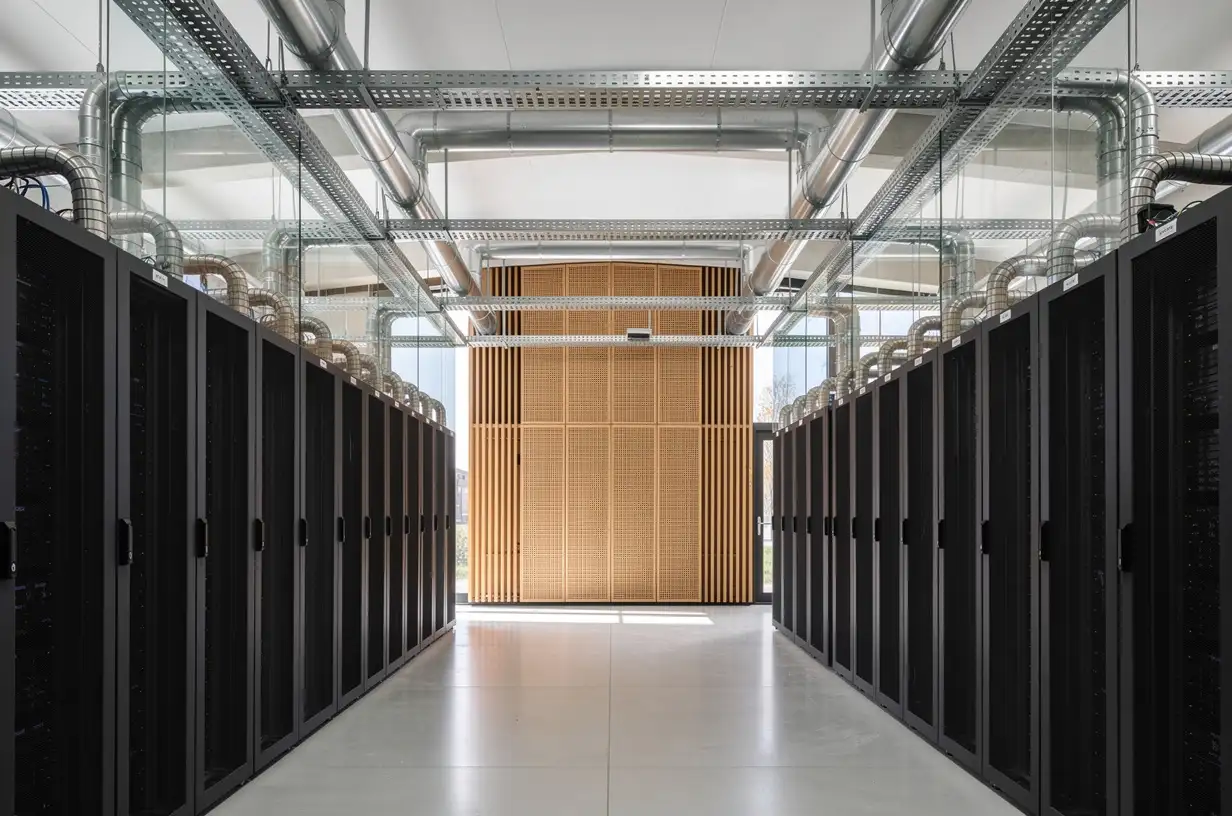
AI training and high-performance computing place different demands on a data center than conventional enterprise workloads: higher power density per rack, more intensive cooling, and less tolerance for latency or connectivity bottlenecks. GreenDatacenters designs for those demands from the outset, not as a retrofit.
AI-ready topics
What high-density compute requires.
Compute & cooling
AI and HPC workloads
01Data halls are designed around the power and cooling profile of AI training and inference and other high-performance computing workloads, not adapted from general-purpose IT specifications.
High-density compute
02Rack densities are engineered well above conventional enterprise levels, with power and cooling capacity matched to that density from the technical design stage.
Direct-to-chip liquid cooling
03Liquid cooling delivered directly to the chip is designed in where rack density requires it, alongside conventional air cooling for lower-density areas.
Heat capture
04Heat generated by high-density compute is captured at the source, ready for recovery and off-take rather than dissipated to the atmosphere.
Power & connectivity
Scalable electrical distribution
01Power distribution within each hall is designed to scale with rack density, from the substation through to the rack, without a redesign at each expansion phase.
Carrier-neutral connectivity
02Fiber connectivity is designed to be carrier-neutral, giving operators a choice of providers rather than a single fixed route.
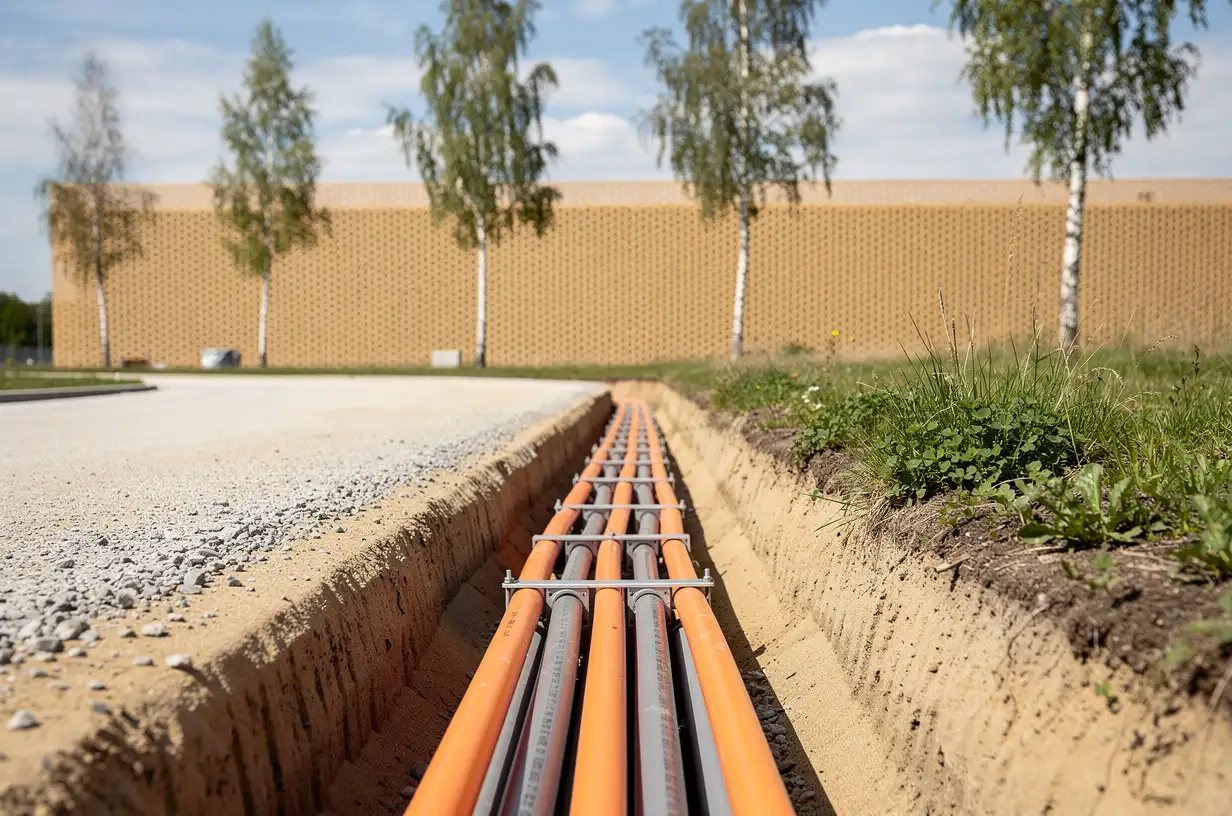
Diverse fiber-route concepts
03Multiple physical fiber entry routes are planned from the earliest design stage, reducing reliance on any single path into the site.
Latency
04Site selection and network design account for the latency requirements relevant to AI and HPC workloads.
Build & operate
Modular data halls
01Halls are built in modular units, allowing capacity to be added in phases as demand and validated capacity develop.
Phased construction
02Construction proceeds in phases aligned with validated demand, rather than a single fixed build-out committed upfront.
Future expansion
03Sites are planned with room and infrastructure capacity for future phases, so expansion does not require renegotiating the fundamentals of the development.
Security
04Physical and technical security measures are integrated into the site design, covering perimeter, building access and critical infrastructure.
Connectivity
Redundant fiber, from day one.
Carrier-neutral, multi-route fiber connectivity is planned alongside power and cooling in the same technical design, not added once construction is underway.