Explainer
What is a data center?
A data center is a purpose-built facility that runs the computing infrastructure behind everyday digital life: cloud applications, streaming, financial transactions, healthcare records, logistics systems and, increasingly, artificial intelligence. This page explains that infrastructure in plain language, for anyone evaluating a proposed development in their region, whether a municipality, a landowner, a resident or an investor.
GreenDatacenters designs and develops this infrastructure as one integrated system, bringing power, cooling, connectivity, security and heat recovery together at the technical design stage, rather than adding them separately once a building already exists.
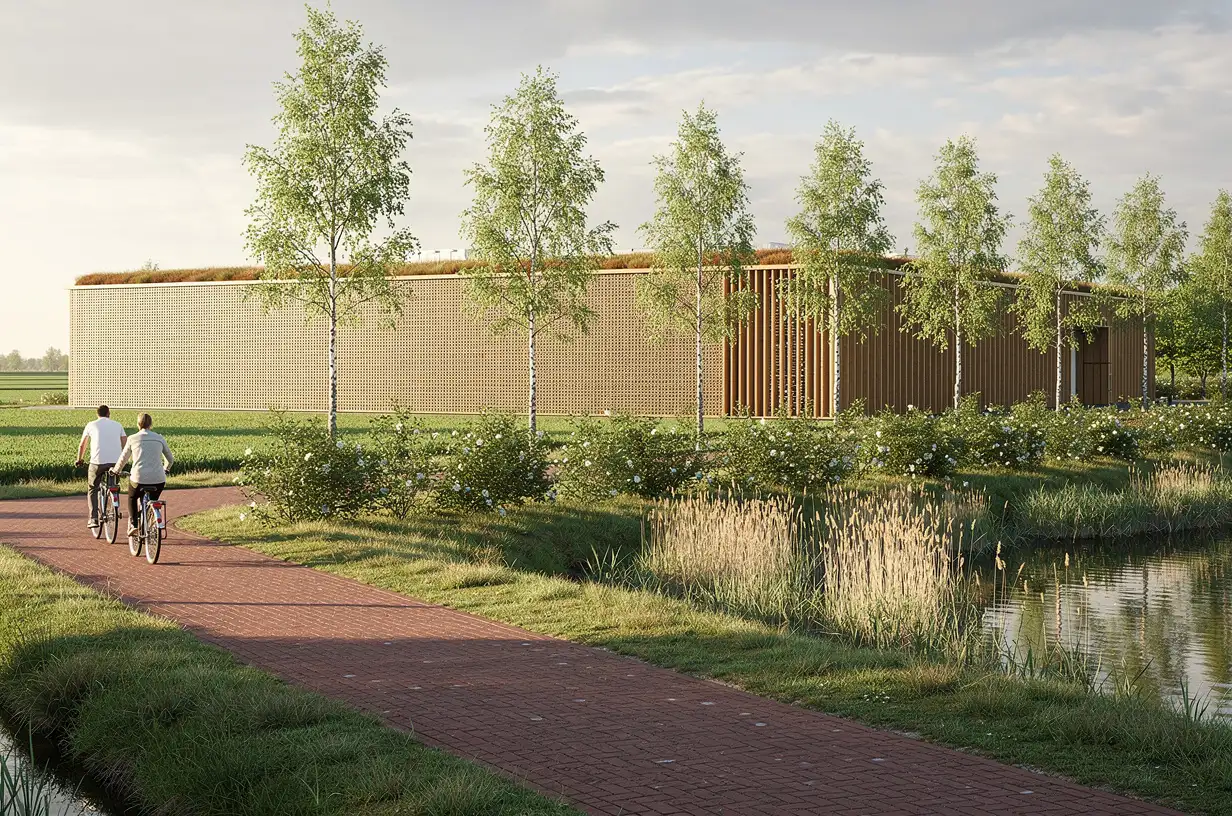
Inside the building
Rows of servers, not offices.
The core of a data center is rows of servers: computers that store data and perform calculations for the applications people use every day. Around them sit the systems that keep those servers running: power distribution, cooling equipment, fiber connections and physical security. Few people work on site day to day; a data center is an industrial, technical facility, not a place of daily employment for large numbers of staff.
Because the servers inside support AI training and inference, cloud platforms and other continuous digital services, the building itself is engineered for uptime and density, not for human occupancy.
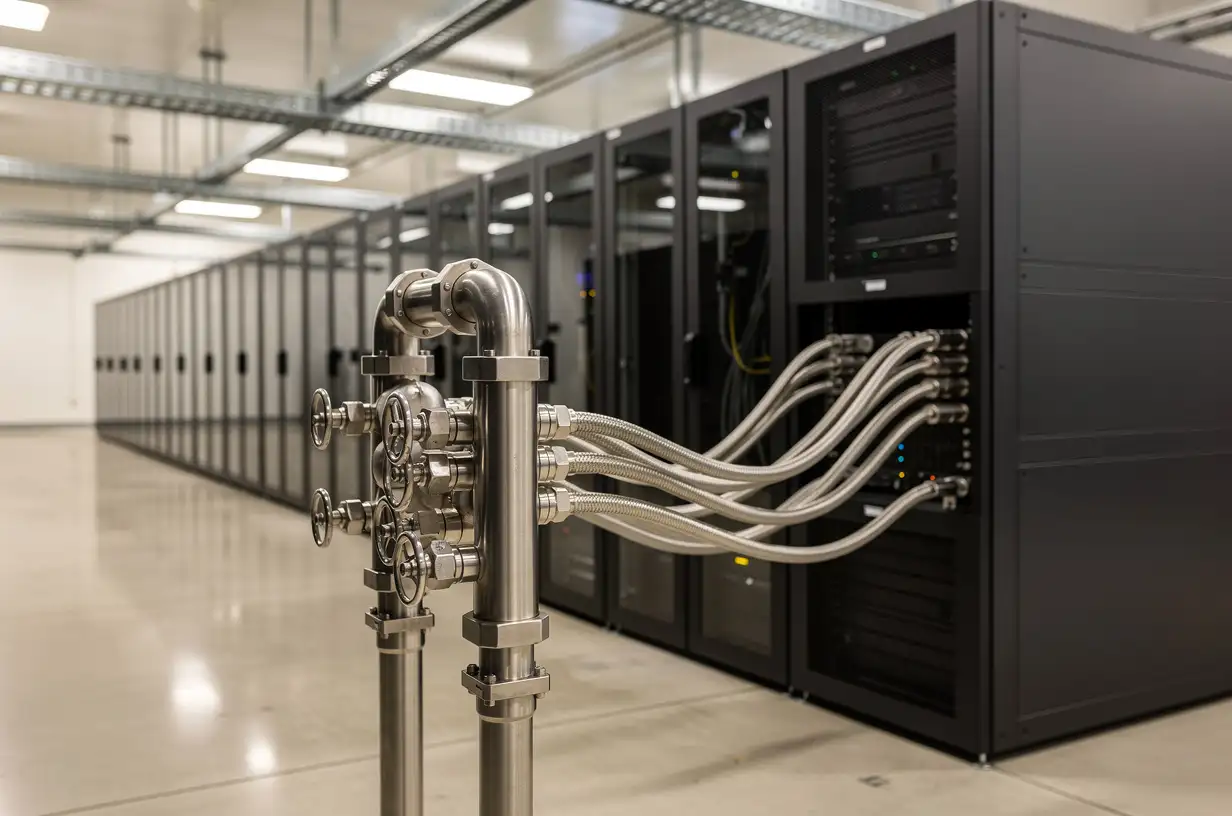
Continuous operation
Always on, by design.
Digital services do not pause outside office hours, so the infrastructure behind them is designed to run continuously, day and night, all year. That requires a reliable power supply, redundancy in critical systems, and cooling that keeps electronic equipment within safe operating limits at all times.
This continuous operation is also why grid connection, on-site energy storage and resilient design are treated as core technical requirements from the earliest planning stage, not as optional additions.
Site requirements
Power, cooling, fiber and security, engineered together.
Power
01A grid connection sized and sequenced to the development, with on-site storage supporting continuous, resilient supply.
Cooling
02Systems that keep server equipment within safe operating limits continuously, sized to the density of the computing inside.
Fiber
03Multiple physical connectivity routes into the site, so the facility is not dependent on a single fiber path.
Security
04Physical and technical measures covering perimeter, building access and critical infrastructure, integrated into the site design.
Scale
What a megawatt means.
Megawatts (MW) measure the electrical capacity a data center is designed to draw, not the number of servers it holds or the amount of data it processes. A development in the range of approximately 100 to 150 MW represents a large, industrial-scale electricity demand, sized specifically to support dense computing and AI workloads running continuously.
Rather than translating that figure into a household or population equivalence, which varies too much by region, season and grid mix to be meaningful, GreenDatacenters treats megawatts as a planning input: it shapes the grid connection strategy, the on-site energy infrastructure required, and the scale of the technical design from the outset.
Final grid capacity, IT load and technical configuration are always validated per project.
Heat recovery
Waste heat, put to use.
Running servers continuously generates heat as a natural by-product of computing. Left unmanaged, that heat is simply removed and lost to the atmosphere. GreenDatacenters instead designs cooling and heat-recovery systems together, so usable heat can be captured, upgraded where required, and made available to suitable off-takers near the site, such as greenhouse horticulture.
Treating heat as a resource rather than a waste stream is one of the reasons digital infrastructure and local industry can share a footprint, when the technical design accounts for it from the start.
Continue reading